


SPF 30 or 50? The amount matters more than the number
The conversation about sunscreen is almost always about the number. SPF 30 or SPF 50, and which is better. That is the least interesting question you can ask, because the difference between those two is completely overshadowed by something else: how much you put on.
What SPF measures, and what it does not
SPF measures one thing: protection against UVB, the radiation that burns you. It says nothing about UVA, the longer wavelength that goes deeper, passes through glass and cloud, and breaks down collagen.
That is what the UVA logo is for, the letters UVA inside a circle. It is only allowed if UVA protection is at least a third of the SPF value. No logo means the product has not been tested against that ratio, however high the number on the front.
| Category | SPF | Filters roughly this much UVB |
|---|---|---|
| Low | 6 to 14 | 83 to 93 per cent |
| Medium | 15 to 29 | 93 to 97 per cent |
| High | 30 to 50 | 97 to 98 per cent |
| Very high | 50+ | over 98 per cent |
Between 30 and 50 there is roughly one percentage point more UVB filtered. The number is a factor, not a percentage: SPF 30 lets through a thirtieth of UVB, SPF 50 a fiftieth. That sounds like a big gap and in real protection it is small.
The amount is the real story
Every SPF number on every package in the world is measured at the same film thickness: 2 milligrams per square centimetre of skin. That is the laboratory standard. Apply less, and you do not get the protection printed on the box.
Almost everyone applies less. In studies the real-world amount usually falls between a quarter and a half of that standard, and protection drops faster than the amount does. At half the prescribed quantity you keep considerably less than half your SPF.
For your face, reckon on about a quarter teaspoon, or two finger-lengths of squeezed-out product. That is more than most people are used to and it feels like too much at first.
This is also why it matters whether an SPF is comfortable to wear. A formula that leaves a white cast or feels greasy gets applied more thinly, without you ever deciding to. How that works in our own formulation is set out on the page SPF without the SPF feeling.
Reapplying
Every two hours outdoors, and more often after swimming, sweating or towelling off. Not because the filters run out, but because the film wears away: it rubs off on clothes and hands, thins with sweat, and you touch your face more than you think.
Indoors behind a window, every two hours is unnecessary. It is about exposure and wear, not the clock.
Three situations where people skip it
Cloudy weather
Thick cloud reduces UV. Thin or broken cloud barely does, and can even raise the level because light scatters between the clouds. The warmth you feel is infrared, not UV, so your skin gives you no useful signal here.
Behind glass
Ordinary window glass blocks nearly all UVB but lets a good share of UVA through. Car side windows, train windows and office windows let through exactly the radiation that concerns collagen and pigment. If you sit by a window routinely, that adds up.
Winter
UVB drops considerably in winter, UVA far less. In snow, reflection is added on top, which changes the sum entirely. The article on being outdoors goes into that.
What ours is
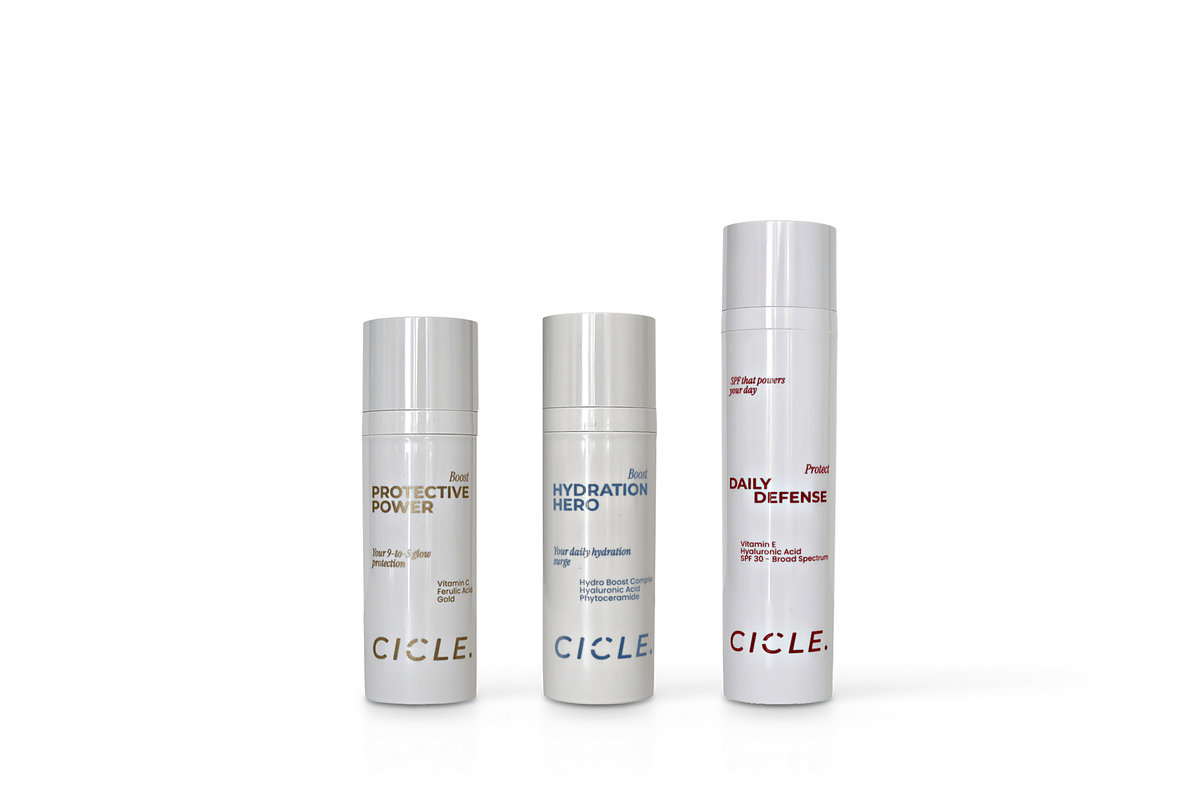
Daily Defense is a moisturiser with broad-spectrum SPF 30, made to work as the last step of your morning rather than a separate layer on top of it. Protection you apply every day is worth more than a higher number that stays in the cupboard.
Frequently asked questions
Is SPF 50 worth it over SPF 30?
Applied just as generously, 50 gives you a little more. But if you use twice as much of a comfortable SPF 30 as you would of a heavy SPF 50, you are better off with the first.
Do I need SPF if I work indoors?
If you sit by a window or step outside during the day, yes. If you spend the whole day in a room without daylight, the gain is small. For most people applying it daily is easier to sustain than deciding afresh each morning.
Can I top up SPF over makeup?
Not properly with a cream. Powders and sprays rarely reach the test film thickness. Better than nothing, but do not count it as having reapplied.
Does SPF expire?
Yes. Check the open-jar symbol for the period after opening, and do not keep it in a hot car, because heat degrades filters.
Sources
- Commission Recommendation 2006/647/EC on the efficacy of sunscreen products and the claims made relating thereto.
- World Health Organization, Radiation: Ultraviolet (UV) radiation.

Share your thoughts
We'd love to hear from you! Leave a comment below and join the conversation.
Please note that all comments are reviewed before being published.