


A scientific framework for outdoor skincare: protection against environmental stressors
Part I: The outdoor environment as a dermatological stressor: a multi-factor analysis
The human skin, while a resilient organ, is subject to a complex array of environmental stressors when exposed to the outdoors. These aggressors—ranging from solar radiation to climatic extremes and atmospheric pollutants—do not act in isolation. Instead, they form a synergistic matrix of threats that can compromise the skin's structural integrity, accelerate aging, and increase the risk of cutaneous malignancies. A comprehensive understanding of each stressor and its mechanism of action is fundamental to developing an effective protective skincare strategy. This analysis deconstructs the primary environmental threats, establishing a scientific foundation for the multi-faceted defense required for optimal skin health during outdoor activities.
The primary aggressor: solar radiation
Solar radiation is unequivocally the principal environmental factor responsible for extrinsic skin aging and damage. The common perception often links this damage to the sensation of heat or visible sunlight, yet the most harmful components of the solar spectrum are invisible and their intensity is not directly correlated with ambient temperature. This disconnect between sensory perception and actual dermatological risk is a critical factor in inadequate photoprotection. The solar spectrum's impact on the skin is primarily attributed to Ultraviolet (UV) radiation and, increasingly, High-Energy Visible (HEV) light.
Ultraviolet A (UVA) and ultraviolet B (UVB) radiation
UV radiation is categorized based on wavelength, with UVA and UVB being the most relevant to skin health.
- UVB Rays (290-320 nm): These are the shorter-wavelength rays primarily responsible for the acute inflammatory response known as sunburn (erythema). UVB radiation penetrates the epidermis and is a potent direct mutagen, causing DNA damage that is a key initiator of most forms of skin cancer. Its intensity varies significantly based on geographical location, season, and time of day, peaking between 12:00 and 15:00.
- UVA Rays (320-400 nm): Constituting up to 95% of the UV radiation reaching the Earth's surface, UVA rays have a longer wavelength that allows them to penetrate more deeply into the dermis. Unlike UVB, UVA intensity is relatively constant throughout the day and year, and it can penetrate clouds and glass. Its primary mechanism of damage is indirect, via the generation of reactive oxygen species (ROS), or free radicals. This oxidative stress leads to the degradation of collagen and elastin, resulting in the clinical signs of photoaging: wrinkles, loss of elasticity, and textural changes. UVA also contributes significantly to the development of skin cancer.
The deceptive nature of UV radiation lies in its environmental modifiers. For every 1,000 feet of elevation gain, UV intensity increases by approximately 10%. Surfaces like snow and water act as powerful reflectors, with snow capable of reflecting up to 80% of UV rays, effectively doubling an individual's exposure. Consequently, activities like skiing on a cold, overcast day can result in a more severe UV insult than a warm day at sea level, despite the lack of heat sensation. This underscores the imperative for year-round, condition-independent sun protection, a stance strongly advocated by dermatological authorities such as the Nederlandse Vereniging voor Dermatologie en Venereologie (NVDV) and KWF Kankerbestrijding.
High-energy visible (HEV) light
Commonly known as blue light, HEV light (400-500 nm) is another component of the solar spectrum. While the sun is the most significant source, exposure also comes from digital devices. Research indicates that HEV light can penetrate the skin even more deeply than UVA and contributes to oxidative stress, inflammation, and hyperpigmentation, particularly in individuals with darker skin tones. Protection against HEV light is an emerging frontier in comprehensive photoprotection.
The barrier breachers: wind and cold
While solar radiation is the primary aggressor, climatic factors such as wind and cold act as critical co-factors that compromise the skin's primary defense: the stratum corneum, or skin barrier. This outermost layer of the epidermis is a complex structure of corneocytes (flattened, dead skin cells) embedded in a lipid matrix of ceramides, cholesterol, and fatty acids. This "brick and mortar" structure is essential for preventing Transepidermal Water Loss (TEWL) and blocking the entry of external irritants.
Cold, dry air holds significantly less moisture than warm air, creating a steep humidity gradient between the skin and the environment. This accelerates TEWL, depleting the skin's Natural Moisturizing Factors (NMFs) and leading to dehydration. Wind exacerbates this effect by continuously removing the thin layer of moisture-rich air at the skin's surface, further increasing the rate of evaporation. This combined assault strips the intercellular lipids, disrupting the barrier's integrity and leading to symptoms of dryness, flaking, redness, and increased sensitivity.
The "windburn" misnomer: a critical re-evaluation
A prevalent and dangerous misconception in skincare is the concept of "windburn" as a distinct condition caused by the abrasive force of wind. Scientific evidence, however, indicates that wind alone does not cause the characteristic red, painful, and peeling symptoms associated with the term. Instead, what is commonly identified as windburn is, in fact, sunburn occurring on skin that has been physiologically compromised and sensitized by exposure to cold and wind.
The mechanism is twofold. First, the desiccating effect of wind and cold strips the skin of its protective lipid mantle, impairing its barrier function and making it more permeable and vulnerable to UV radiation. Second, the cold acts as a topical anesthetic, masking the initial stinging and burning sensations of a developing sunburn. Individuals may not realize they are being burned until significant cellular damage has already occurred. This reframing of windburn is not merely semantic; it represents a critical educational pivot. It clarifies that the primary preventative measure against windburn is not simply a heavy, wind-blocking cream, but diligent application of broad-spectrum sunscreen. Any effective outdoor skincare product must address both barrier impairment and UV exposure simultaneously.
The unseen aggressor: atmospheric pollutants
A third, often overlooked, environmental stressor is atmospheric pollution. Particulate matter (PM2.5), ozone (O3), nitrogen oxides (NOx), and other pollutants prevalent in both urban and rural environments can settle on the skin's surface. These pollutants can generate a significant load of free radicals, inducing oxidative stress that contributes to inflammation, collagen degradation, hyperpigmentation, and a compromised skin barrier.
The threat from pollutants is amplified by UV radiation. This synergistic relationship means that the combined presence of sun and pollution results in a greater degree of oxidative damage than the sum of each factor individually. A skin barrier already weakened by wind and cold is more susceptible to the penetration of these harmful particles. This establishes a clear need for skincare that not only protects against UV radiation but also provides a robust antioxidant defense to neutralize pollution-induced free radicals. The outdoor environment, therefore, presents a complex, synergistic threat matrix, requiring a sophisticated and multi-pronged defensive strategy.
Part II: A proactive defense: the science of protective skincare ingredients
An effective response to the multi-faceted environmental threats outlined in Part I requires a skincare strategy built on scientifically validated ingredients. This strategy can be conceptualized as a multi-layered defense system. The first and most critical layer is sunscreen, which blocks or absorbs UV radiation. The second layer consists of antioxidants, which neutralize the free radicals that penetrate the primary defense. The third layer involves ingredients that actively support and repair the skin barrier, enhancing its resilience against all forms of environmental stress.
Sunscreen science: the non-negotiable first line of defense
Sunscreen is the single most important product for preventing sun damage, photoaging, and skin cancer. Its efficacy is determined by several key factors, with guidelines established by regulatory bodies and dermatological associations providing a gold standard for consumer protection.
- Sun Protection Factor (SPF): SPF primarily measures protection against UVB radiation, the main cause of sunburn. The NVDV and KWF Kankerbestrijding recommend a minimum of SPF 30 for all skin types. It is crucial to understand that the SPF scale is not linear; SPF 30 blocks approximately 97% of UVB rays, while SPF 50 blocks about 98%.
- Broad-Spectrum Protection: This designation indicates that a sunscreen provides protection against both UVB and UVA radiation. Given the profound role of UVA in photoaging and carcinogenesis, broad-spectrum protection is non-negotiable for daily and outdoor use.
- Application and Reapplication: The protective efficacy of any sunscreen is critically dependent on its application. The "rule of 7" provides a practical guideline for volume: one teaspoon for the face and neck, two for the torso, two for the arms and shoulders, and two for the legs and feet. Sunscreen should be applied 20-30 minutes before sun exposure to allow it to form a protective film. Reapplication is required at least every two hours, and more frequently after swimming, sweating, or towel drying, even when using a water-resistant formula.
The antioxidant arsenal: neutralizing the invisible damage
While sunscreen is the primary shield, no product can block 100% of UV radiation. Furthermore, sunscreen offers limited protection against free radicals generated by pollution and HEV light. This is where antioxidants play a crucial secondary role. They do not block UV rays but work within the skin to neutralize the free radicals that are formed, thereby preventing the cascade of oxidative stress and cellular damage. A formulation containing a cocktail of different antioxidants provides a broader and more effective defense than a single ingredient.
The following table summarizes the mechanisms and benefits of key antioxidants relevant to outdoor skincare:
|
Antioxidant |
Primary Mechanism |
Key Benefits for Outdoor Skin |
Relevant Sources |
|
Vitamin C (L-Ascorbic Acid & Derivatives) |
Potent water-soluble free radical scavenger; co-factor for collagen synthesis. |
Neutralizes free radicals from UV and pollution; visibly brightens skin tone; boosts collagen production to repair damage. |
|
|
Vitamin E (Tocopherol) |
Lipid-soluble antioxidant; protects cell membranes from lipid peroxidation. |
Works synergistically with Vitamin C to provide robust photoprotection; helps stabilize the skin barrier. |
|
|
Niacinamide (Vitamin B3) |
Precursor to coenzymes NAD+/NADH; anti-inflammatory; supports ceramide production. |
Calms sun- and wind-induced redness and inflammation; strengthens the skin barrier; reduces hyperpigmentation. |
|
|
Ferulic Acid |
Plant-derived phenolic antioxidant. |
Stabilizes and enhances the protective efficacy of Vitamins C and E, creating a powerful synergistic combination. |
|
|
Green Tea Extract (Polyphenols) |
Contains epigallocatechin gallate (EGCG), a powerful antioxidant and anti-inflammatory agent. |
Soothes irritated skin; provides photoprotective benefits by reducing oxidative stress and inflammation. |
By incorporating a potent antioxidant serum into a routine before sunscreen application, one creates a reservoir of protection within the skin, effectively reinforcing its defenses from the inside out.
Fortifying the fortress: barrier support and hydration
Addressing the barrier disruption caused by wind and cold is the third pillar of a comprehensive outdoor skincare strategy. A healthy, intact skin barrier is less permeable to environmental aggressors and more efficient at retaining moisture. An effective formulation for outdoor use will contain a balanced mix of hydrating and barrier-repairing ingredients.
- Humectants: These ingredients attract and bind water to the skin. Glycerin and Hyaluronic Acid are gold-standard humectants that draw moisture into the upper layers of the epidermis, providing essential hydration.
- Emollients: These ingredients soften and smooth the skin by filling in the gaps between corneocytes. Shea butter and squalane are excellent emollients that improve skin texture and flexibility.
- Occlusives: These ingredients form a protective layer on the skin's surface to physically block TEWL. Traditional advice for extreme cold often involves heavy, petrolatum-based occlusives. However, for active individuals, these can feel greasy and may contribute to clogged pores when combined with sweat and sunscreen. A more sophisticated approach utilizes biocompatible occlusives that mimic the skin's natural structure.
Ceramides are a prime example; as the primary lipid component of the skin barrier, topical application directly replenishes what is lost to environmental exposure, repairing the barrier from within and providing effective occlusion without a heavy feel.
This modern formulation strategy resolves the "occlusive paradox." It allows for the creation of products that offer robust protection against moisture loss in harsh conditions while remaining cosmetically elegant and non-comedogenic, making them suitable for all outdoor activities. Such products provide superior protection that is also comfortable and conducive to consistent use.
Part III: The outdoor skincare protocol: a 360-degree approach
Translating the science of protective ingredients into practice requires a structured, multi-step protocol. An effective outdoor skincare regimen is not a single event but a continuous cycle of care that can be divided into three distinct phases: preparation before exposure, maintenance during activity, and recovery afterward. This framework shifts the user's mindset from being merely reactive (treating damage after it occurs) to being proactive and strategic, thereby preserving long-term skin health and resilience.
The pre-adventure regimen (preparation)
This morning routine is designed to fortify the skin and build a multi-layered defense before heading outdoors. Each step is crucial for establishing a resilient foundation that can withstand the environmental stressors of the day.
- Step 1: Gentle Cleansing: The routine begins with a clean surface to ensure optimal absorption of subsequent products. However, it is vital to use a mild, non-stripping cleanser that respects the skin's lipid barrier. Harsh, high-pH cleansers can compromise the barrier before it is even exposed to the elements, creating a deficit in its defensive capacity.
- Step 2: Antioxidant Serum Application: After cleansing, a high-potency antioxidant serum should be applied to the skin. This step acts as a crucial "undercoat" of protection, creating a reservoir of free-radical-neutralizing compounds within the skin's layers. This internal shield will work throughout the day to combat the oxidative stress generated by UV rays and pollution that bypasses sunscreen.
- Step 3: Barrier-Supporting Moisturizer: Next, a moisturizer formulated with a blend of humectants, emollients, and biocompatible occlusives should be applied. This step hydrates the skin and reinforces the stratum corneum, making it less susceptible to the desiccating effects of wind and cold. Ingredients like ceramides, niacinamide, and glycerin are particularly beneficial here.
- Step 4: Sunscreen Application: This is the final and most critical step of the preparatory phase. A generous amount of broad-spectrum sunscreen with an SPF of 30 or higher must be applied to all exposed areas of the skin, including the face, neck, ears, and hands. Following the "rule of 7" ensures adequate coverage, and application 20-30 minutes before going outside allows the UV filters to form a uniform, protective film.
On-the-go protection (maintenance)
Protection is not a one-time application; it requires diligent maintenance throughout the duration of the outdoor activity.
- Sunscreen Reapplication: The protective capability of sunscreen degrades over time due to UV exposure and can be worn off by sweat and friction. Therefore, reapplication every two hours is essential for maintaining adequate protection. This interval should be shortened after swimming, heavy perspiration, or towel drying.
- Protective Clothing and Accessories: Skincare products should be viewed as part of a larger sun safety system. Physical barriers provide an additional and highly reliable layer of defense. This includes wide-brimmed hats, UV-blocking sunglasses to protect the delicate skin around the eyes, and, where practical, clothing with an Ultraviolet Protection Factor (UPF) rating.
- Lip Protection: The skin on the lips is particularly thin and vulnerable, lacking the sebaceous glands that help protect other areas of the face. It is a common site for sun damage and skin cancer. Consistent use of a lip balm with broad-spectrum SPF 30 or higher is crucial and requires frequent reapplication, especially after eating or drinking.
The post-exposure recovery routine (repair)
The final phase of the protocol focuses on removing the day's aggressors and initiating the skin's repair and recovery processes. This is not merely about treating a sunburn but about intelligently supporting the skin's natural regenerative cycle to mitigate sub-clinical damage and maintain long-term health.
- Step 1: Thorough yet Gentle Cleansing: Upon returning indoors, it is imperative to thoroughly cleanse the skin. This removes the accumulated layers of sunscreen, sweat, sebum, and environmental pollutants that can otherwise clog pores and lead to breakouts or irritation. A mild, hydrating cleanser should be used to avoid further stripping the potentially sensitized skin.
- Step 2: Soothing and Calming: After cleansing, the focus shifts to calming any inflammation and reducing redness. Products containing soothing ingredients such as aloe vera, niacinamide, green tea extract, or colloidal oatmeal can help mitigate the inflammatory response triggered by UV and other environmental stressors.
- Step 3: Replenishing and Repairing: The final step is to provide the skin with the necessary components to repair its barrier and replenish lost moisture overnight. A rich, restorative moisturizer or night cream containing a high concentration of ceramides, nourishing fatty acids, and humectants will support the skin's nocturnal regenerative processes. This helps to restore barrier integrity, reduce TEWL, and ensure the skin is calm, hydrated, and resilient for the following day.
This comprehensive three-phase protocol transforms outdoor skincare from a simple act of applying sunscreen into a holistic strategy for preparing, maintaining, and repairing the skin, ensuring it remains healthy and protected through any adventure.
Part IV: CICLE product integration and recommendations
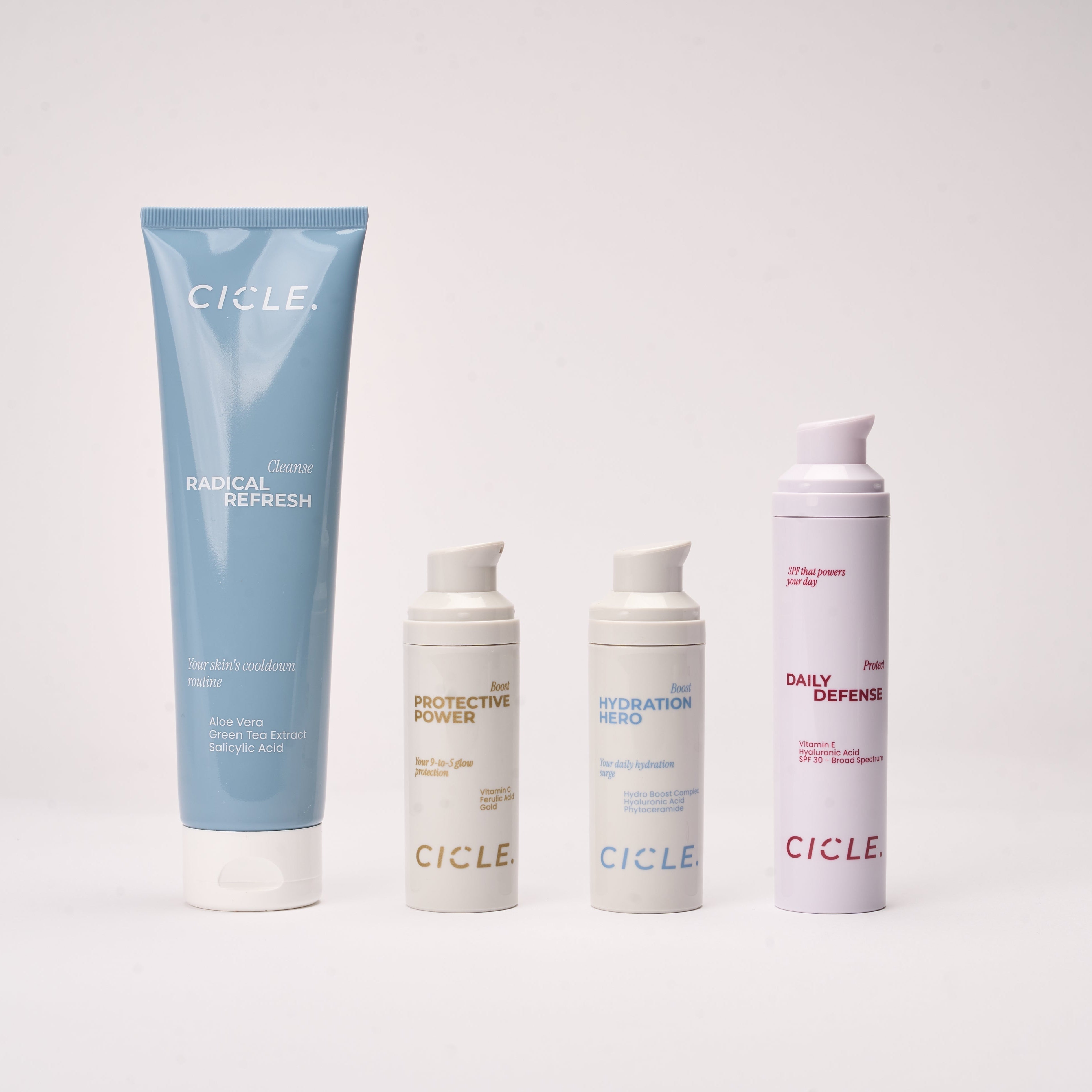
The scientific principles and protocols established in the preceding sections provide a clear framework for the strategic formulation and positioning of CICLE products. The brand's "Daily Defense" and "Protective Power" products are ideally suited to form the core of an effective outdoor skincare routine, addressing the synergistic matrix of environmental threats with sophisticated, multi-functional formulas.
Formulation analysis: daily defense & protective power
Based on their product names and the established scientific needs for outdoor protection, the following evidence-based profiles can be constructed for these key CICLE products.
Protective power
Positioning: A high-potency antioxidant serum, designed to be Step 2 in the Pre-Adventure Regimen.
Hypothesized Formulation Rationale: This product is formulated to act as the skin's second line of defense, neutralizing the free radicals generated by UV, pollution, and HEV light. To combat the "Synergistic Threat Matrix," its formula would logically contain a powerful, stabilized cocktail of antioxidants known for their synergistic effects.
- Key Ingredients:
- Vitamin C (e.g., Ascorbyl Tetraisopalmitate): A stable, oil-soluble form of Vitamin C that penetrates deeply to provide potent antioxidant protection, brighten the complexion, and support collagen synthesis.
- Vitamin E (Tocopherol): Works in concert with Vitamin C to protect cellular membranes from lipid peroxidation, a key mechanism of sun damage.
- Ferulic Acid: A plant-based antioxidant that is scientifically shown to stabilize Vitamins C and E, doubling their photoprotective capacity when formulated together.
This combination provides a comprehensive defense against oxidative stress, effectively "pre-loading" the skin with the tools it needs to defend itself from within throughout the day.
Daily defense
Positioning: A multi-tasking SPF moisturizer, designed to be the combined Step 3 and Step 4 in the Pre-Adventure Regimen.
Hypothesized Formulation Rationale: This product is engineered to be the ultimate one-step solution for daily outdoor protection. It addresses the three primary pillars of defense: UV protection, antioxidant support, and barrier fortification.
- Key Ingredients:
- Broad-Spectrum SPF 30: Provides the clinically recommended level of protection against both UVA and UVB radiation, forming the non-negotiable first line of defense.
- Vitamin E
- Hyaluronic Acid
By combining these functions into a single, elegant formula, "Daily Defense" simplifies the morning routine while providing comprehensive, multi-faceted protection against the full spectrum of outdoor environmental stressors.
A tailored CICLE routine for the outdoor enthusiast
Synthesizing all the established principles, the following actionable routine provides a clear, brand-aligned protocol for CICLE users, ensuring optimal skin health during any outdoor adventure.
Morning (pre-adventure)
- Cleanse: Begin with a gentle, hydrating cleanser, such as cicle skin Radical Refresh, to prepare the skin without stripping its natural defenses.
- Protect from Within: Apply Protective Power antioxidant serum to the face and neck. This creates a deep reservoir of protection against free radical damage.
- Defend and Hydrate: Apply a generous amount of Daily Defense SPF 30+ Moisturizer to all exposed skin at least 20 minutes before going outside. This provides the essential UV shield while hydrating and fortifying the skin barrier.
During adventure
- Maintain Protection: Re-apply Daily Defense every two hours, or more frequently if swimming or sweating heavily.
- Protect Lips: Regularly apply a broad-spectrum SPF 30+ lip balm.
Evening (post-exposure recovery)
- Cleanse Thoroughly: Use a gentle cleanser to remove all traces of sunscreen, sweat, and environmental debris from the day.
- Replenish and Repair: Apply a targeted CICLE serum and moisturizer focused on hydration and barrier repair. For intensive hydration, cicle skin Hydration Hero (with Hyaluronic Acid and Phytoceramides) would be an excellent choice.
This structured, product-specific routine provides users with a clear, easy-to-follow path to comprehensive skin protection. It leverages the advanced, multi-functional formulations of CICLE products to offer a scientifically robust defense against the complex challenges of the outdoor environment.


Share your thoughts
We'd love to hear from you! Leave a comment below and join the conversation.
Please note that all comments are reviewed before being published.